Documentation has a new purpose

Documentation used to focus primarily on helping people complete tasks themselves: where to click, what to configure, and which steps to follow. As software agents increasingly handle those step-by-step tasks, humans need something different: clear mental models, system architecture, and tradeoffs that guide high-level decisions. Meanwhile, agents require unambiguous, structured instructions to operate reliably. Documentation must now serve both audiences at once, explaining the system to people and making it directly executable for agents. When docs fail either group or fall behind, agents fail, users need support, and engineers lose time answering avoidable questions.
As someone who spent years building open-source documentation tools, I have watched teams repeatedly struggle with the same problem: maintaining public docs in a separate silo from internal knowledge inevitably leads to drift.
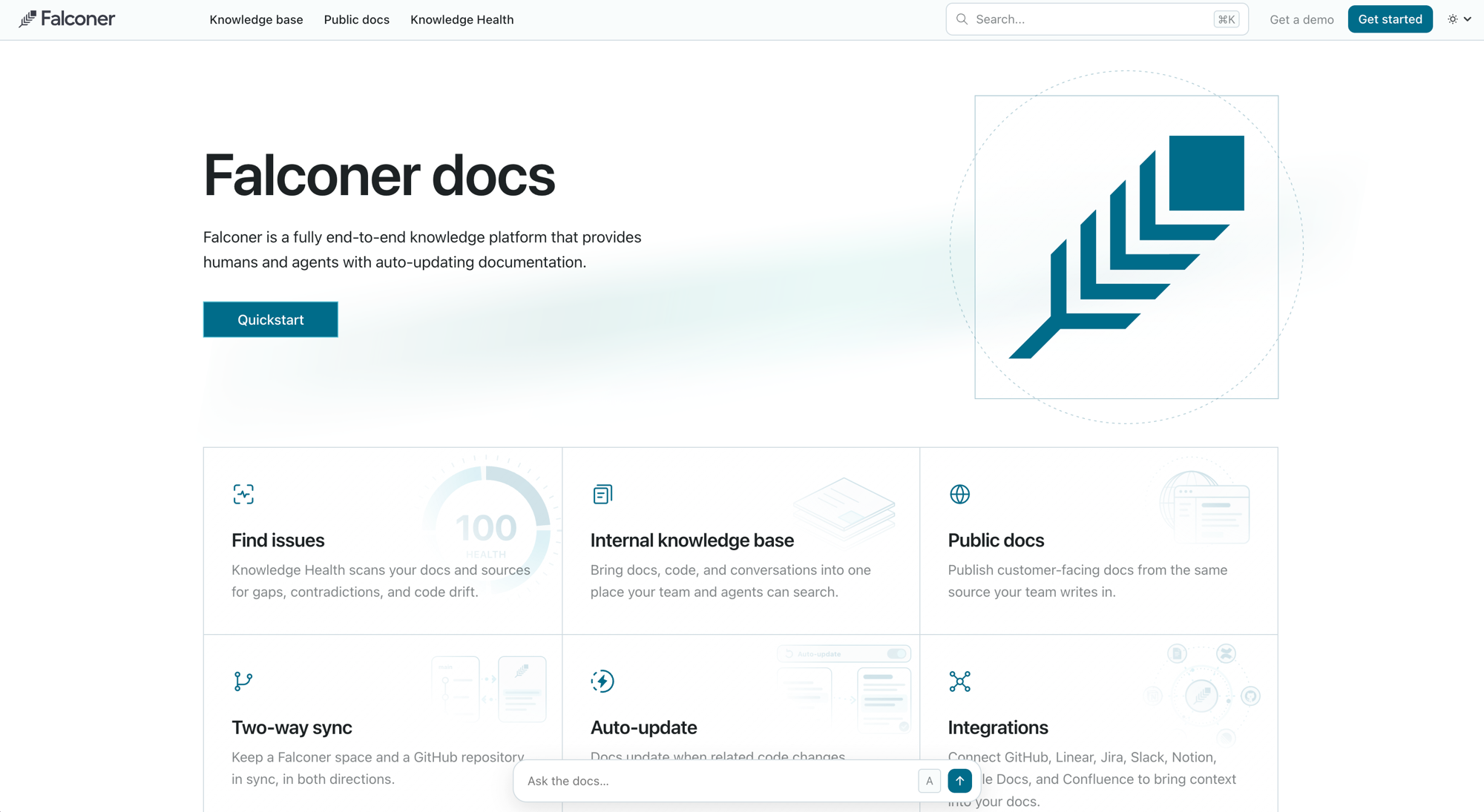
Falconer was built to keep company knowledge connected, current, and useful. We believe documentation should be living infrastructure, not a static artifact. Fast, accessible sites matter, but polish means little when the content lags behind the product. After experiencing the failure of fragmented documentation firsthand, Public Docs felt like the natural next step: extending the same knowledge system teams use internally to the people using their products.
One unified knowledge system
Public documentation usually lives in a dedicated repository or publishing system, separate from the code, specifications, and decisions that shape the product. That creates a manual handoff: whenever the product changes, someone must remember to update the public docs too. Because that update is manual, the documentation often stops matching the product.
Falconer takes a different approach: one knowledge system for your team and your customers. Public Docs lets you publish customer-facing documentation from the same knowledge base your team already uses internally. Public content lives in its own dedicated space, but remains connected to the code, decisions, and internal context behind it. Teams can give customers structured guides and agent-powered answers without copying content into a separate system.
What we’re building
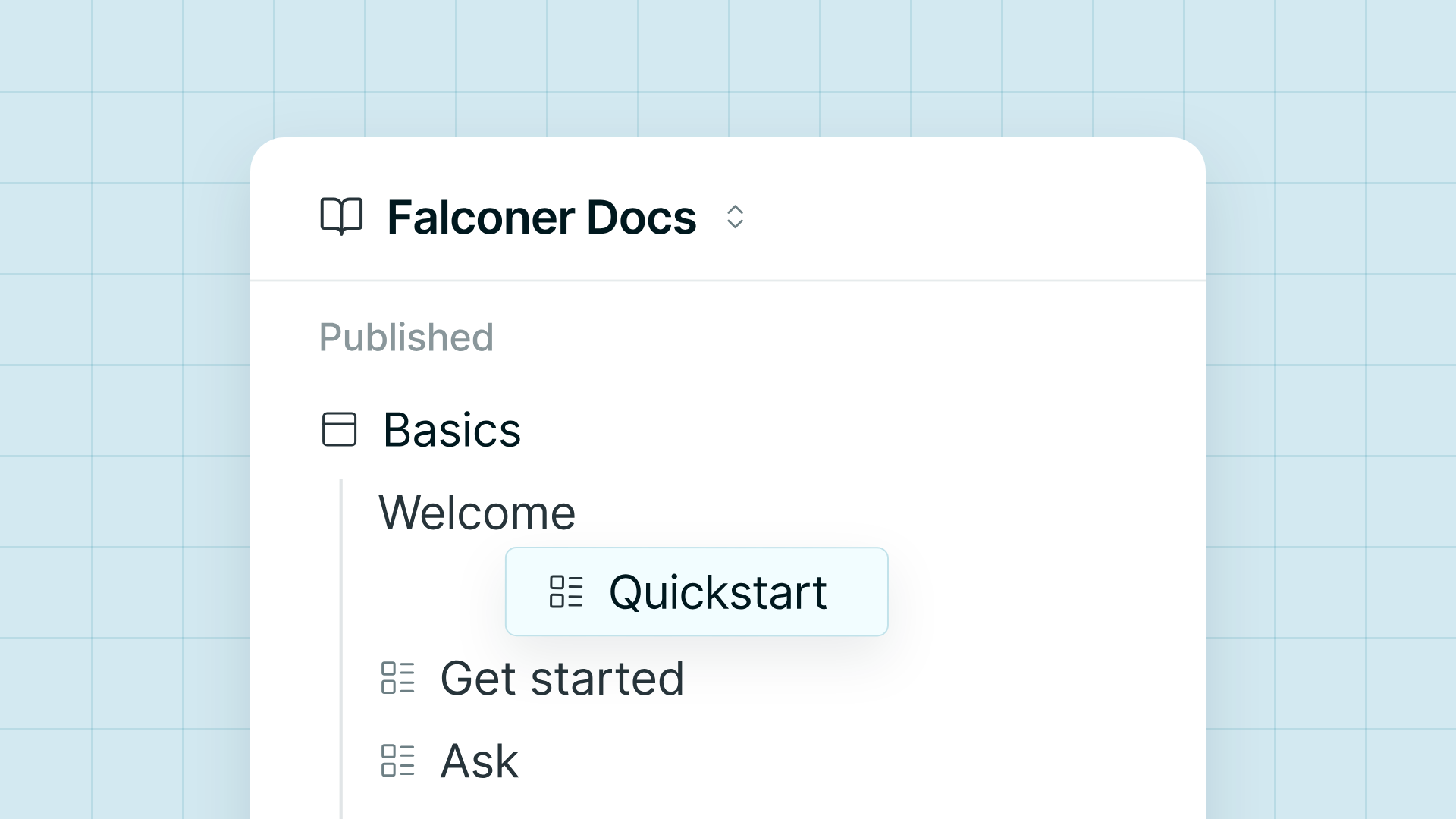
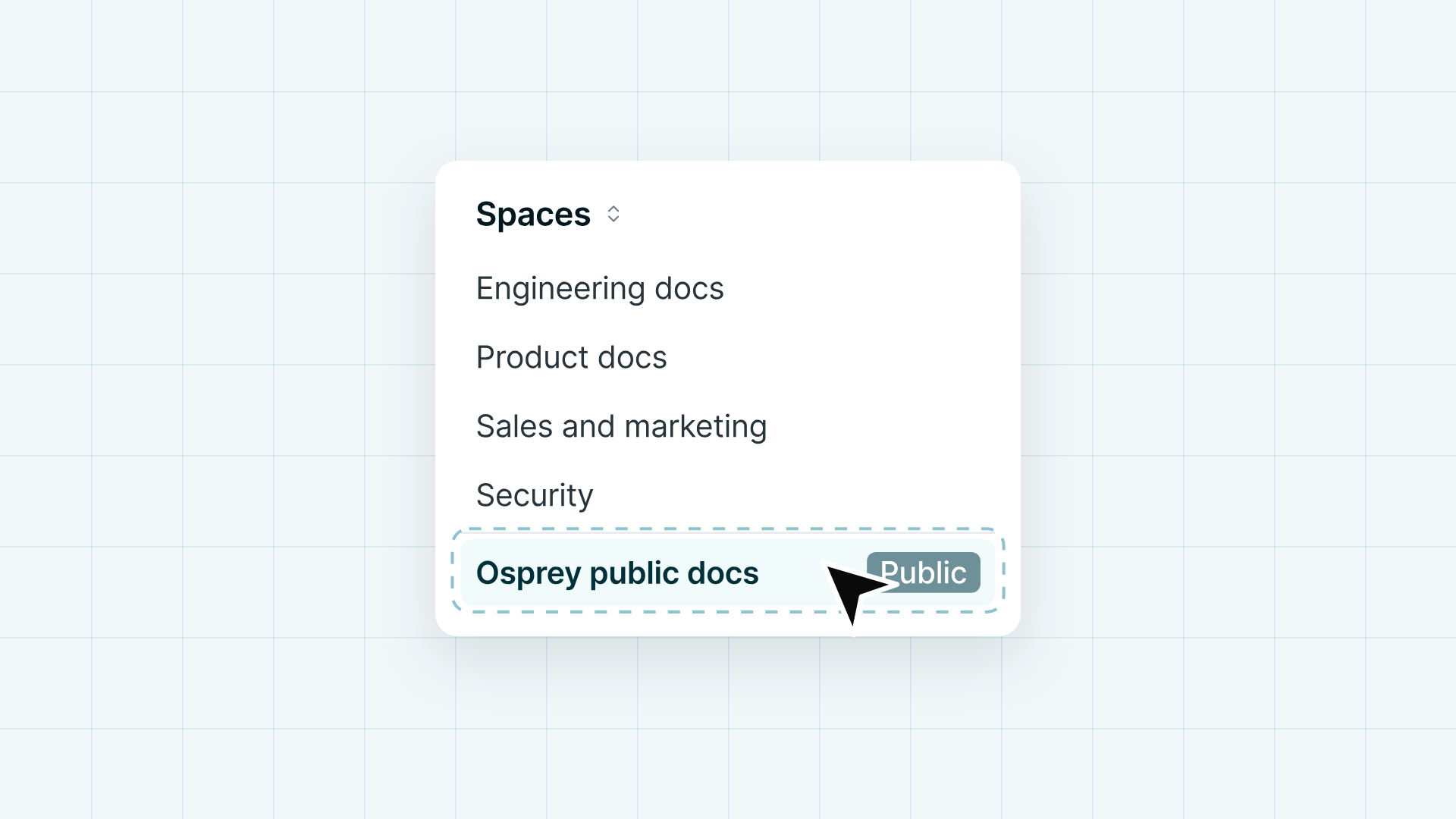
Public Docs transforms any Falconer Space - a corner of the organization - into a hosted, accessible documentation site with a built-in Falcon agent.
Public Docs functions as the public window into your organization’s living knowledge base, directly connected to the internal discussions, specs, and code that shape your product. Because it remains connected to that internal knowledge, teams can keep customer-facing documentation accurate without maintaining a separate system. Customers can find accurate answers without waiting for support, and their agents have the context they need to complete tasks correctly. Knowledge is up-to-date and trusted by the people and agents who need it.
Getting started
Falconer’s Public Docs beta is open now. We’re conducting research, collecting feedback, and iterating as we build towards the full Public Docs platform. More to come in the following weeks.
Contact us to see how Public Docs can shape the way your team writes and your customers browse.
Ready to get started?
Create an account and start building your knowledge base — no contracts or credit card required. Or, contact us to design a custom package for your team.