GPT-5.6 vs GPT-5.5: is the newer model worth switching to? (July 2026)
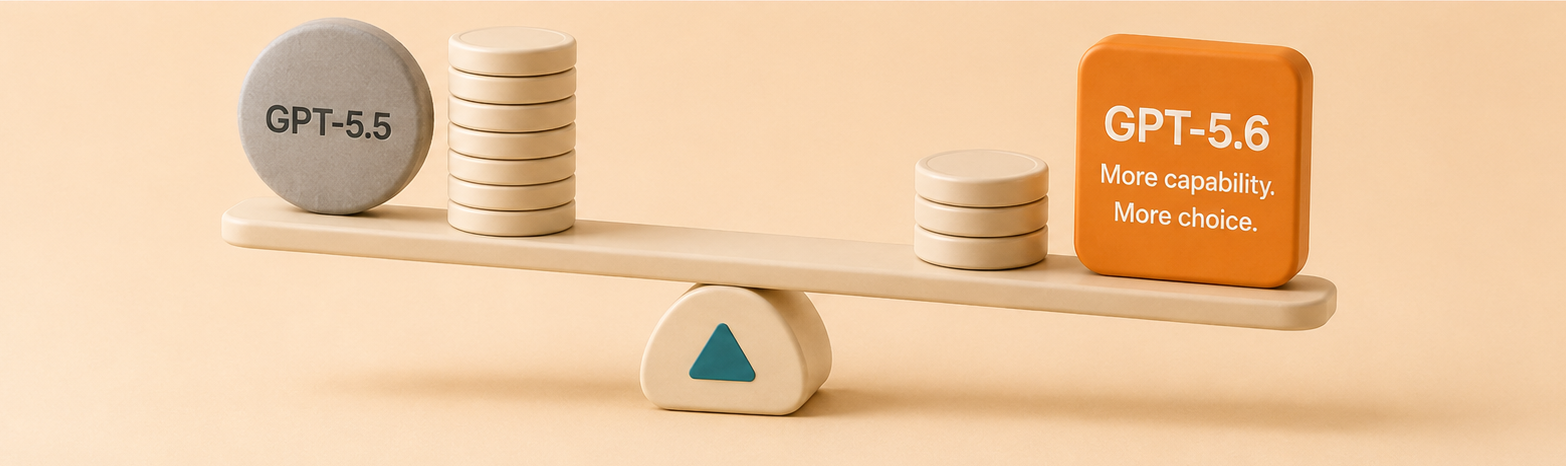
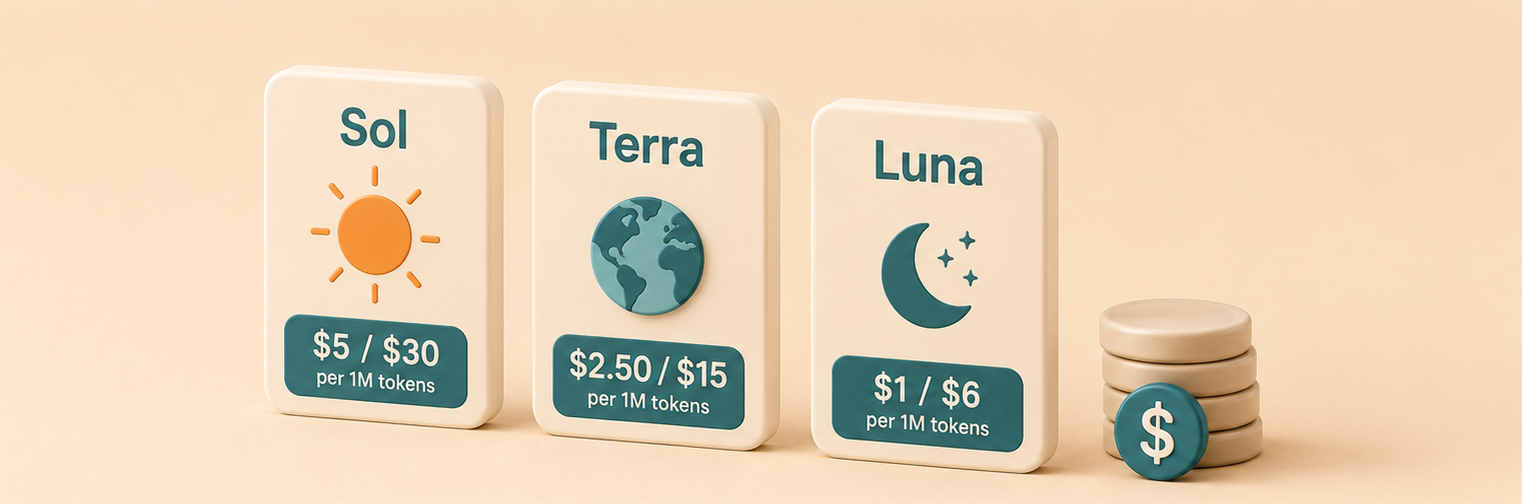
If you are already running GPT-5.5 for documentation and wondering whether GPT-5.6 is worth the switch, the answer turns on which tier you pick and how much you value cost over frontier reasoning. GPT-5.6 comes in three tiers: Sol at $5 input / $30 output, Terra at $2.50 / $15, and Luna at $1 / $6 per million tokens. GPT-5.5 sits at $5 / $30, the same as Sol. So the upgrade path is straightforward: Terra gives you GPT-5.5-class performance at roughly half the cost, Sol raises the reasoning ceiling at the same price, and Luna is the cheap high-volume option.
TLDR
-
GPT-5.6 reached general availability in July 2026; GPT-5.5 is the prior generation it succeeds.
-
GPT-5.6 has three tiers: Sol ($5/$30), Terra ($2.50/$15), and Luna ($1/$6) per 1M tokens.
-
GPT-5.5 costs $5 input / $30 output per 1M tokens, matching GPT-5.6 Sol on price.
-
OpenAI positions Terra as delivering GPT-5.5-competitive performance at roughly half the cost.
-
Docs-bench holds the codebase and Knowledge Health config constant, so a same-lab GPT-5.6 vs GPT-5.5 run isolates generational improvement from cross-lab noise.
Why compare two models from the same lab?
A same-lab generational comparison answers the question a buyer actually asks: is the new model worth switching to? Cross-lab comparisons carry noise from different training data, tokenizers, and tool integrations. Holding the lab constant strips that out, so the Knowledge Health delta between GPT-5.6 and GPT-5.5 reflects one thing, which is whether OpenAI’s newer generation writes and maintains documentation better than the one you are probably already running.
What is GPT-5.6?
GPT-5.6 is OpenAI’s newest model family, generally available as of July 2026 across ChatGPT, the API, and Codex, with tier rates on OpenAI’s pricing page. It ships in three tiers. Sol is the flagship for complex reasoning, long-horizon agentic work, and coding, intended for tasks where correctness matters more than cost. Terra is the balanced tier for everyday production traffic, positioned as competitive with GPT-5.5 at roughly half the price. Luna is the fastest and cheapest tier, built for high-volume, latency-sensitive work.
What is GPT-5.5?
GPT-5.5 is OpenAI’s prior-generation model, priced at $5 input / $30 output per million tokens on the standard tier, with cached input at $0.50 per million. Requests above 272K tokens of context move to a long-context schedule of $10 input / $45 output. It has been a common default for coding and documentation workloads, which makes it the right baseline to measure GPT-5.6 against.
Pricing comparison
| Dimension | GPT-5.6 Sol | GPT-5.6 Terra | GPT-5.6 Luna | GPT-5.5 |
|---|---|---|---|---|
| Input $/1M | $5 | $2.50 | $1 | $5 |
| Output $/1M | $30 | $15 | $6 | $30 |
| Positioning | Flagship reasoning | Balanced production | Fast, high-volume | Prior-gen default |
| Availability | Generally available | Generally available | Generally available | Generally available |
Does GPT-5.6 write better docs than GPT-5.5?
This is what Docs-bench measures. Each generation drives Falconer Spark to produce a from-scratch docs set on the same repository, and Knowledge Health scores accuracy against the code, coverage, freshness, and citation quality. The composite delta between GPT-5.6 Sol and GPT-5.5 is the number that decides it. Because the two share a lab and lineage, a positive delta is clean evidence of generational improvement rather than a difference in style. See the current results on the Docs-bench page.
Which tier should replace GPT-5.5 in a docs workflow?
If you are optimizing for cost, Terra is the direct swap. OpenAI positions it as competitive with GPT-5.5 at roughly half the price, so a documentation workflow that runs fine on GPT-5.5 should run at similar quality on Terra for less. If you are optimizing for the hardest docs tasks, tracing tangled call paths or reasoning across a large codebase, Sol raises the ceiling at the same $5 / $30 you already pay for GPT-5.5. If your workload is high-volume and latency-sensitive, Luna at $1 / $6 is the cheapest option in the family.
Which tier is cheapest per docs run?
A from-scratch docs run reads far more tokens than it writes, so input price drives most of the cost, not output. That ranks the family from cheapest to priciest on input: Luna at $1, Terra at $2.50, and Sol tied with GPT-5.5 at $5. The lesson is that the switch worth making is rarely to the most expensive tier. With the right context in front of the model, a cheaper tier usually clears the quality bar, which is why Terra or Luna can match a workflow you run today on GPT-5.5 for less. Docs-bench is how you find the floor: it shows how far down the tiers you can drop before the Knowledge Health score falls off.
What Docs-bench proves that a leaderboard cannot
A public leaderboard tells you a new model scores higher on general benchmarks. It does not tell you whether that improvement shows up in documentation on your codebase. The generational anchor exists to prove Docs-bench detects improvement, not just difference: if Knowledge Health scores GPT-5.6 above GPT-5.5 on the same repo and config, the benchmark is measuring real gains rather than noise. That is the control that makes every other Docs-bench comparison trustworthy.
Want the fixed prompt set and Knowledge Health config to run this generational test yourself? Read the Docs-bench methodology.
Why run the switch test in Falconer
Falconer is the knowledge layer that generates the docs, scores them, and keeps them current after you pick a model.
- Generate a full docs set from a live codebase with Spark, so the GPT-5.6 vs GPT-5.5 test runs on real code, not a toy repo.
- Score every run against the same Knowledge Health config, so the delta reflects docs quality rather than prompt luck.
- Keep docs current as code changes, so the winning model’s output does not drift the week after you commit to it.
- Get cited answers in the editor, Slack, and your AI tools, so a PM or an agent can verify any claim against its source.
See the latest Docs-bench results
FAQ
Is GPT-5.6 better than GPT-5.5 for documentation?
GPT-5.6’s Sol tier raises the reasoning ceiling at the same price as GPT-5.5, and Terra matches GPT-5.5-class performance at roughly half the cost. Falconer’s Docs-bench measures the exact Knowledge Health delta on a fixed codebase to confirm the improvement is real.
How much does GPT-5.6 cost compared to GPT-5.5?
GPT-5.5 costs $5 input / $30 output per million tokens. GPT-5.6 ranges from Luna at $1 / $6 to Terra at $2.50 / $15 to Sol at $5 / $30, so two of the three tiers undercut GPT-5.5.
Should I switch from GPT-5.5 to GPT-5.6?
For cost savings at similar quality, switch to GPT-5.6 Terra. For harder reasoning at the same price, switch to Sol. Both are generally available as of July 2026, so there is no access barrier to testing the swap on your own docs.
Which GPT-5.6 tier is Sol, Terra, or Luna best for docs?
Sol for the hardest reasoning-heavy docs tasks, Terra as the balanced production default and direct GPT-5.5 replacement, Luna for high-volume, latency-sensitive documentation at the lowest price.
Is GPT-5.6 generally available?
Yes. As of July 2026 GPT-5.6 is generally available across ChatGPT, the API, and Codex. GPT-5.5 remains available as the prior generation.
How much does it cost to generate a full docs set with GPT-5.6?
Cost tracks input tokens, since a from-scratch run reads far more than it writes. That makes Luna ($1 input) the cheapest tier, Terra ($2.50) the balanced pick, and Sol ($5) a match for GPT-5.5 on price. Docs-bench reports the quality each tier buys, so you can weigh the spend against the score.
What is Docs-bench?
Docs-bench is Falconer’s benchmark for how well a model generates and maintains engineering documentation. Each model drives Spark to produce a docs set from scratch on the same repository, then Knowledge Health scores the output on accuracy, coverage, freshness, and citation quality. Holding the repo and config constant is what makes the score gap the signal.
Measure the upgrade on your own docs
Falconer’s Docs-bench scores GPT-5.6 and GPT-5.5 on your codebase so you can see the generational delta before you switch. See the latest Docs-bench results.
Ready to get started?
Create an account and start building your knowledge base — no contracts or credit card required. Or, contact us to design a custom package for your team.
Ready to get started?
Create an account and start building your knowledge base — no contracts or credit card required. Or, contact us to design a custom package for your team.