What is a company knowledge base and why does it break at scale? (May 2026)
Your team writes docs. You have a company knowledge base, maybe Confluence or Notion, full of guides and runbooks. Then your codebase changes, your APIs evolve, someone refactors a core service, and those docs quietly become historical fiction. Nobody updates them because engineers are measured on shipping, not on wiki maintenance. The result is a knowledge base that technically has everything but practically gets ignored, because finding accurate information takes longer than asking the person who wrote the code. Your real problem is maintenance, and it gets worse every time you ship.
TLDR:
- Company knowledge decays within 30-90 days of publication as code ships and systems evolve.
- Employees lose 1.8 hours daily searching for scattered information across tools.
- AI agents amplify stale docs, generating code based on outdated assumptions at scale.
- Self-updating systems close the gap between reality and documentation automatically.
- Falconer maintains knowledge by auto-flagging docs when code changes eliminate manual upkeep.
What is a company knowledge base and why companies need one
A company knowledge base is a centralized repository where an organization stores its documentation, procedures, decisions, and institutional knowledge. It functions as your team’s collective memory, written down and made searchable.
The concept is old, but the urgency has grown. According to Vanilla Forums, 98% of customers now use FAQ pages, help centers, or other self-service resources on company websites. Knowledge bases have become table stakes for external support. What gets less attention is that internal teams need the same infrastructure, often more desperately.
Engineers, product managers, and support teams generate knowledge constantly throughout the day. The real question is whether that knowledge lives somewhere useful or scatters across Slack threads, Google Docs, and someone’s head. Most companies start with good intentions: they pick a tool, write some docs, and move on. Then the cracks show up.
The fundamental breaking point: knowledge exists but can’t be found
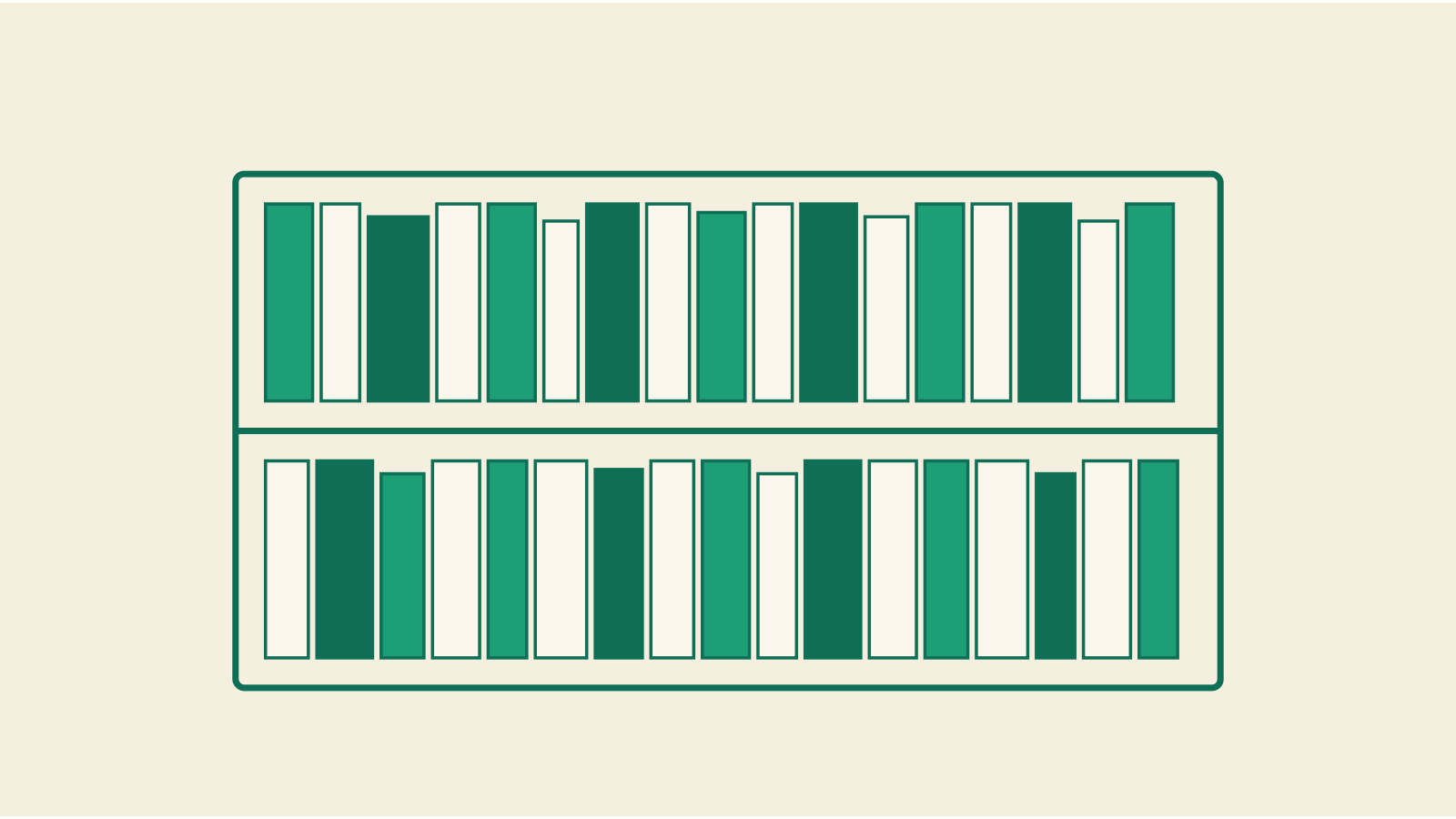
Documentation exists. Somewhere. Finding it takes so long that people give up and ask a colleague instead.
According to McKinsey, employees spend roughly 1.8 hours every day searching for and gathering information. Do the math across a five-person team, and you’re losing one full headcount to search time alone. That’s a person who could be shipping code or closing deals, swallowed by a retrieval problem.
When search fails often enough, trust erodes. Engineers stop checking the wiki and start pinging the teammate who’s been around the longest. That senior engineer becomes a human search index, fielding the same questions week after week. They answer because it’s faster than pointing someone to a doc that might be wrong. And the knowledge base? It sits there, technically full, practically empty.
How knowledge fragments across five sources simultaneously
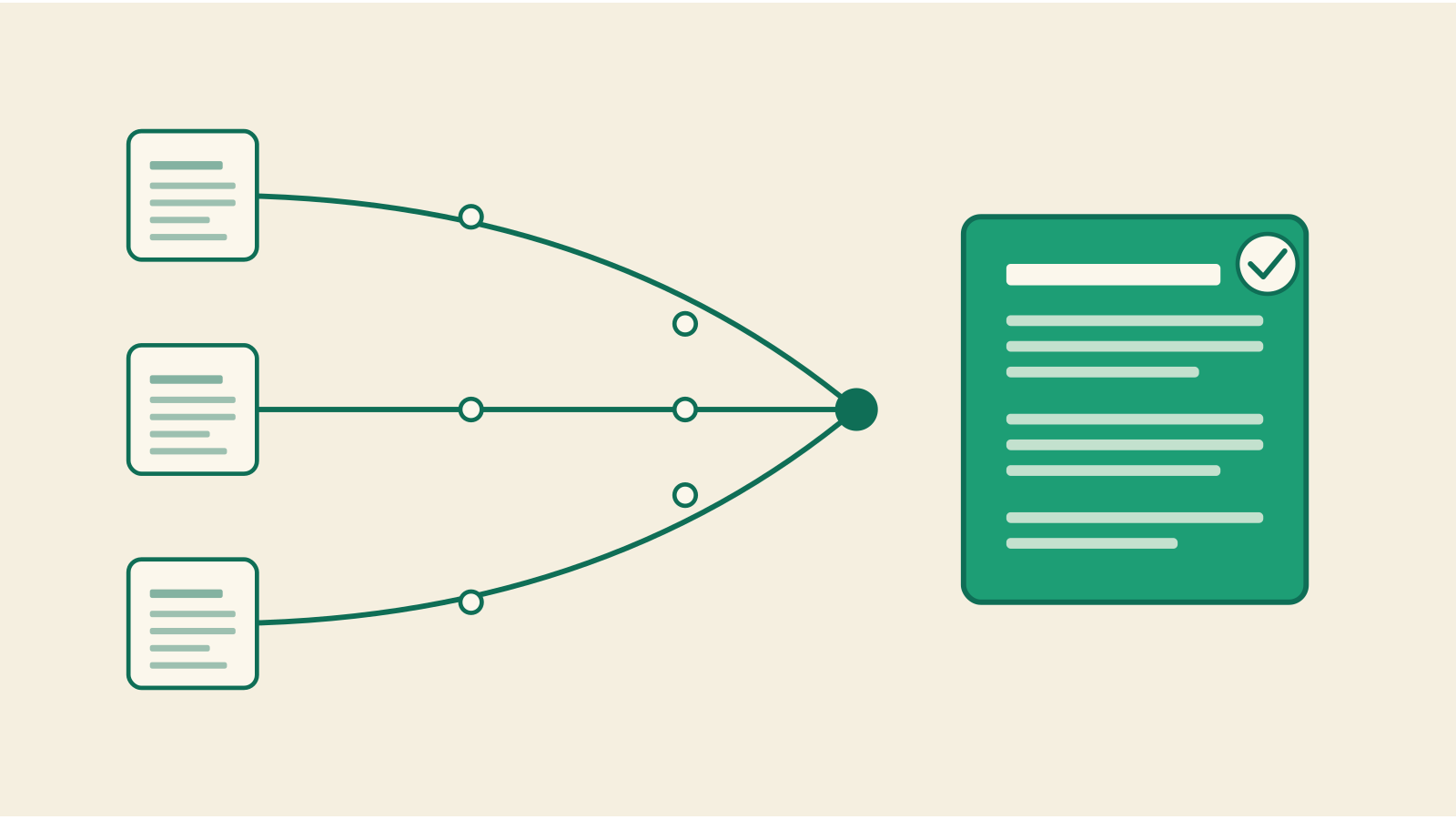
Most teams are buried in fragmentation. A single decision might live in five places at once: the Slack thread where it was debated, the pull request where it was implemented, the README that half-describes it, the Linear ticket that triggered it, and the Confluence page nobody updated afterward. These sources never connect.
None of these sources talk to each other. So when someone needs the full picture, they’re stitching it together manually, tab by tab. McKinsey research suggests workers spend roughly 20% of their workweek searching for internal information. That’s an entire day, every week, lost to digital scavenger hunts.
The irony? Each new app you add creates another silo with its own search, its own permissions, its own version of the truth. Too many disconnected tools, each aging independently, create fragmentation — and adding more tools only deepens it.
The documentation death spiral: why docs decay the moment you ship
Documentation has a half-life, and it’s shorter than most teams admit. Technical docs become materially outdated within 30 to 90 days of publication. Code ships, APIs change, architecture evolves, and the docs that described last quarter’s reality quietly become fiction.
The standard fix is cultural: ask engineers to update docs when they change code. It sounds reasonable. It also fails almost every time. Engineers are measured on shipping, not on maintaining a wiki page three clicks deep. When deadlines hit, docs lose. Always.
Here’s what makes the problem worse than simple neglect: stale documentation creates false confidence. A new hire reads an onboarding guide, follows its instructions, and builds on assumptions that haven’t been true for months. No documentation at all would have prompted them to ask questions. Outdated documentation told them they already had the answer. Every outdated page erodes trust in the entire knowledge base, until the team stops consulting it altogether. The solution is to find and fix outdated docs before they cause damage.
Why AI agents make stale knowledge dramatically more dangerous
A stale wiki page used to mean a confused new hire spent an extra afternoon asking around. Annoying, but contained. AI agents change the calculus entirely. When a coding agent pulls from outdated documentation, it generates code with full confidence, built on assumptions your team reversed three sprints ago. It does this at machine speed, across entire codebases.
The financial toll of scattered knowledge is already steep. Distributed documentation, tribal knowledge, and fragmented decision history quietly cost enterprises $2 to $3 million annually for every 200 engineers. Now layer in AI agents that propagate those inaccuracies at scale, generating pull requests, drafting runbooks, and answering questions, all grounded in context that expired weeks ago. The blast radius of a single outdated doc goes from one confused person to dozens of polluted outputs.
The five signals of knowledge health that traditional systems miss
Most knowledge base tools track one metric: when a file was last modified. That tells you almost nothing about whether the information inside still reflects reality. Real knowledge health requires watching for five distinct signals that most Confluence alternatives still miss:
- Coverage gaps: topics your team discusses daily in Slack or standups that have zero corresponding documentation
- Contradictions: two or more docs making conflicting claims about the same system, with no indication which is correct
- Code drift: the codebase has changed but the docs describing it haven’t
- Redundancy: identical or near-identical content scattered across multiple locations, each aging independently
- Freshness: how recently content was reviewed relative to the pace of change in its subject area
Detecting these signals requires understanding content semantically, beyond checking timestamps. Manual audits can’t keep pace with organizations shipping code multiple times a day, which is why most teams simply stop trying.
| Knowledge health signal | What traditional systems track | What Falconer detects | Real-world example |
|---|---|---|---|
| Coverage Gaps | Nothing - relies on manual doc creation | Topics discussed in Slack, standups, and PRs that have no corresponding documentation | Engineering team discusses database migration strategy across 15 Slack messages, but no runbook exists documenting the process |
| Contradictions | Nothing - each doc exists independently | Multiple docs making conflicting claims about the same system, API, or process | One README says authentication uses OAuth2, another doc references deprecated API keys, causing new hires to implement the wrong approach |
| Code Drift | File modification timestamp only | Semantic changes in codebase that invalidate documentation claims, even when doc file was never touched | Service endpoint changed from REST to gRPC three months ago, but integration guide still shows curl examples that no longer work |
| Redundancy | Nothing - duplicate content proliferates unchecked | Identical or near-identical content scattered across multiple locations, each aging and diverging independently | Deployment instructions exist in Confluence, README, wiki, and Notion - each version slightly different, none fully current |
| Freshness | Last modified date regardless of change velocity | Review recency relative to the pace of change in the subject area being documented | Core authentication doc last updated six months ago seems recent, but 47 PRs have touched the auth system since then |
How self-updating knowledge closes the maintenance loop
The real solution removes humans from the maintenance loop entirely by automatically updating docs when code changes. When documentation updates keep docs in sync with PRs and code changes, accuracy becomes a byproduct of shipping, not a separate chore competing for bandwidth.
This is the architectural shift that matters: instead of asking “did someone remember to update the docs?” the system watches for changes and flags or applies updates itself. The gap between reality and documentation closes continuously instead of waiting for a quarterly audit that never happens.
Falconer’s approach: documentation that maintains itself
Falconer watches for all five of those signals automatically. When a PR merges, it reads the code diff, identifies which docs are affected, and proposes exact edits. Coverage gaps, contradictions, code drift, redundancy, freshness: each one gets caught by understanding content semantically, not by checking a last-modified date. This approach differs from Confluence and traditional knowledge bases.
The result is a company knowledge base that stays accurate as a byproduct of your team shipping code. No quarterly audits, no wiki gardening sprints, no hoping someone remembers. Your knowledge base becomes something people actually trust, because it earns that trust continuously.
Final thoughts on self-updating documentation
Every company knowledge base starts with good intentions and ends with docs your team stopped trusting months ago. You can’t solve the maintenance problem by asking busier engineers to update more wiki pages, so Falconer does it automatically by reading your code changes and proposing exact edits. Your documentation becomes accurate as a side effect of shipping instead of a separate chore competing for time. Connect your repositories and get documentation that updates itself.
FAQ
What is a company knowledge base?
A company knowledge base is a centralized repository where your organization stores documentation, procedures, decisions, and institutional knowledge. It functions as your team’s collective memory, made searchable so engineers, product managers, and support teams can find answers without asking colleagues the same questions repeatedly.
Company knowledge base software vs building your own wiki?
Pre-built knowledge base software gives you search, permissions, and integrations out of the box, while building your own wiki means maintaining infrastructure yourself. The real difference is whether the system can detect when docs go stale and update them automatically. Most DIY wikis and traditional platforms can’t, which is why documentation decays within 30-90 days regardless of which tool you pick.
Can knowledge base software keep docs updated without manual work?
Yes, but only if the system watches your codebase and other sources for changes. Traditional knowledge base software requires humans to remember to update docs after shipping code, which fails consistently. Self-updating systems like Falconer monitor pull requests and code changes, then flag or apply doc updates automatically so accuracy becomes a byproduct of shipping instead of a separate task.
How do you create a knowledge base for employees that they’ll actually use?
Build it where knowledge already lives instead of asking people to context-switch to another tool. Connect your knowledge base to GitHub, Slack, Linear, and other sources your team uses daily, then make search work across all of them at once. When finding answers takes less time than pinging a colleague, people will use it.
What’s the biggest risk of using AI agents with outdated documentation?
AI agents generate code and answers at machine speed based on whatever context you give them. When that context is outdated, agents produce dozens of polluted outputs: bad code, wrong procedures, incorrect answers, all before anyone notices. Stale docs used to mean one confused person; with AI agents, one outdated page can propagate errors across your entire codebase.
Ready to get started?
Create an account and start building your knowledge base — no contracts or credit card required. Or, contact us to design a custom package for your team.
Ready to get started?
Create an account and start building your knowledge base — no contracts or credit card required. Or, contact us to design a custom package for your team.