Your context is more than training data

Why did anyone ever subject themselves to Jira before Linear? Because the promise of organized task tracking is universally appealing. But the reality of Jira is a nightmare—confusing UX; points poker plugins; built for scrum masters, not for builders. Once Linear delivered a better way to track tasks, slowly and then suddenly, everyone started jumping ship.
Every Confluence customer has faced the same problem: the editor is unusable, Rovo is the obnoxious uninvited party guest, and the whole platform is offensively slow and buggy. But the promise of centralized organizational knowledge and context is every CTO’s dream.
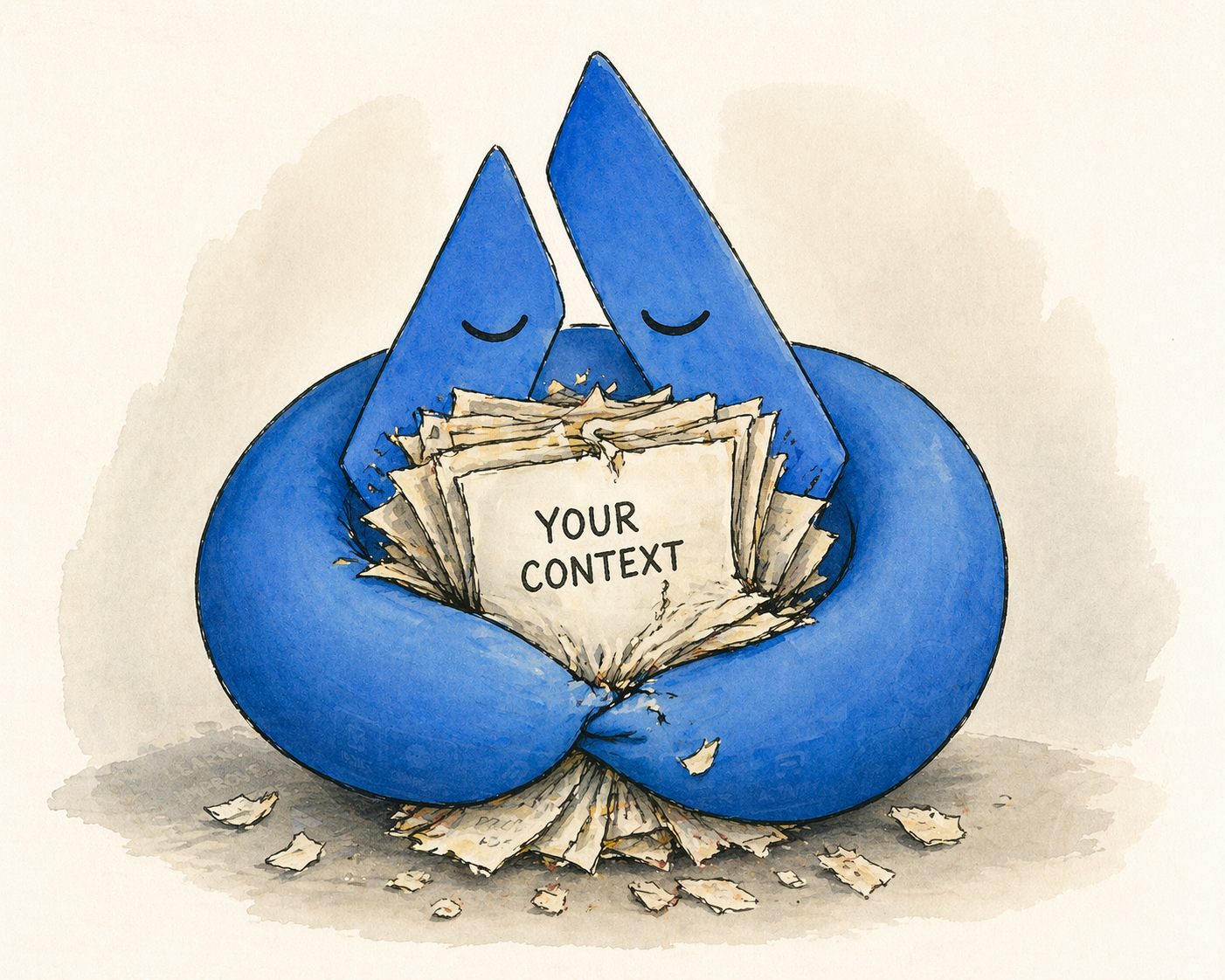
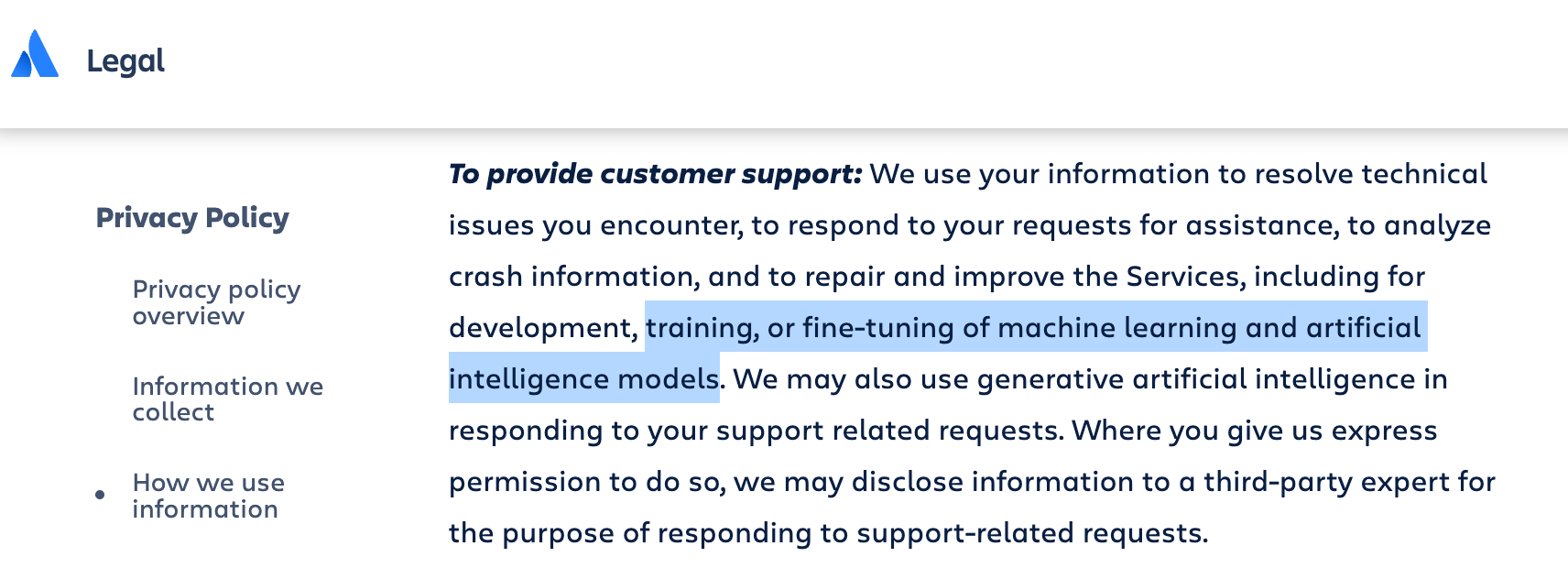
With the recent announcement that Atlassian will use its vast resources to train on your data instead of improving its product, Confluence victims now have another compelling reason to switch: not only is Confluence unusable as a product, but it’s dangerous to use at all. Effective August 17, 2026, Atlassian’s tentacles around your data will start to tighten more and more.
As a publicly traded company in free fall, Atlassian is choosing to please Wall Street instead of its customers. Your hard-earned context, for the benefit of Confluence.
Context is fuel
Satya called out the importance of context sovereignty at Davos this year: “There is comparative advantage in firms. That needs to be preserved, even in the AI era. That’s what’ll give you real sovereignty.”
Context is the living record of how your organization thinks. Why decisions were made, what was attempted before, and the tradeoffs you evaluated. In an agent-driven world, that historical record is the most crucial input. Context is fuel. And the performance ceiling of any agent your team deploys is set by the quality of what you feed it.
Context compounds. Teams that maintain good context get better results from AI, move faster, generate more high-quality decisions and knowledge, which makes their context flywheel spin even harder. This is backed by research, simple math, and common sense. The teams that start investing in their context now will be harder to beat later. The teams that don’t take their context seriously are throwing in the towel.
Your context matters now more than ever
From the large incumbent competitor you’re chasing to the latest YC batch trying to disrupt you, everyone has access to the same frontier models, techniques, and agents that you do. Your advantage is your context, your business logic, your battle scars that live inside your four walls. Curating your context and plugging it into your models and agents is an existential requirement.
A few years ago, scattered and outdated docs meant shitty search results and an extra Slack message here and there. But today it means neutered agents with unreliable knowledge, burning more tokens ingesting the world with every prompt, and most importantly, opportunity cost. Your AI-native competitors, those YC batches, are starting fresh. They can take your product, emulate it, and find the soft underbelly in the market to start to eat your share. Your advantage is taking all of your decisions, hard-earned lessons, and company secrets and plugging them into AI as rocket fuel. Then it’s not a fair fight whatsoever—you have a huge advantage over your competitors.
Is unleashing an expensive frontier model on your Confluence graveyard the path to winning? Absolutely not. Arming your agents with accurate, centralized context is how you win.
Weaponizing your context before your competitors do
Some of the most enduring companies like Google, Amazon, and Stripe have long had internal teams building their own knowledge tools and acting as librarians, curating and maintaining their company’s context. Part of becoming an enduring company means that people can come and go, and the organization survives. Because knowledge gets passed through written artifacts, not just oral history.
Agents do real work now. Writing code, reviewing PRs, triaging issues, and building features that actually ship. Anyone using agents knows the gap between what an agent can do with accurate context vs without it. Letting agents fly blind means burned tokens, low-quality output, and opportunity cost.
Context debt is accumulating silently inside of technical teams: decisions made in meetings that never made it into docs, architectural choices buried in Slack, tickets closed without descriptions. AI-generated code that no single human can understand.
Instead, you need to build a fundamentally different relationship with your knowledge. Treat it like your company depends on it, because it does. Every outdated document and every buried Slack thread is a faulty instruction to an agent. Every company lesson trapped in an email or someone’s head is a missed opportunity.
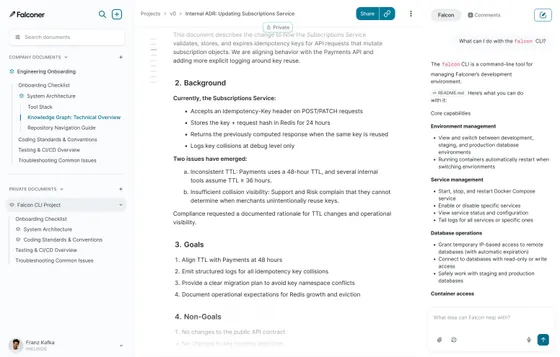
A real knowledge layer connects across your stack where the work happens—code, conversations, tasks, meeting notes—and keeps that context current. Falconer is built around exactly that: updating docs as your code, tasks, and decisions change. A living source of truth that performs the tireless librarian work that your organization desperately needs.
The existential chasm to cross
Context is your moat. Everyone has artificial intelligence, but only you have the ability to leverage your unique institutional intelligence. Don’t let it go to waste.
Ready to get started?
Create an account and start building your knowledge base — no contracts or credit card required. Or, contact us to design a custom package for your team.