Tools that answer questions from Slack using internal docs: May 2026 guide
When you start comparing Slack question-answering tools, they all seem to do the same thing. Someone asks a question, the bot responds, everyone moves on. What separates them is whether those answers stay accurate as your software changes. Static search returns links to pages no one updated since Q3. Retrieval engines pull from docs that decayed months ago. Live knowledge systems stay grounded in your actual codebase and conversations. The category you pick determines whether your team trusts the tool or keeps pinging each other anyway.
TLDR:
- Engineers spend 30% of their time searching for info, often interrupting teammates in Slack
- Answers in threads disappear within hours; 68% of technical docs go over 6 months without updates
- Tools that answer from Slack range from basic search bots to live knowledge intelligence systems
- Best systems cite sources, stay current with code changes, and understand context across repos
- Falconer auto-answers Slack questions from live sources like code, docs, and tickets
Why engineers are your most expensive search engine
Someone asks “how does X work?” in Slack. An engineer sees the ping, context-switches out of whatever they were building, and types up an answer. Five minutes later, they’re trying to remember where they left off. That answer? Buried in a thread no one will ever find again.
This is the productivity tax hiding in plain sight. Your highest-paid builders are functioning as human search engines, fielding the same questions week after week. A question lands in Slack, someone tags the person who knows, that person responds, and the knowledge evaporates into the thread. Next month, a new hire asks the same thing. The cycle restarts.
The cost is staggering. Engineers spend up to 30% of their time searching for information they need to do their jobs. That’s nearly a third of productive hours lost to the black hole of missing or unfindable internal documentation. Every unanswered question becomes an interruption for someone else, and every answered one becomes a ghost.
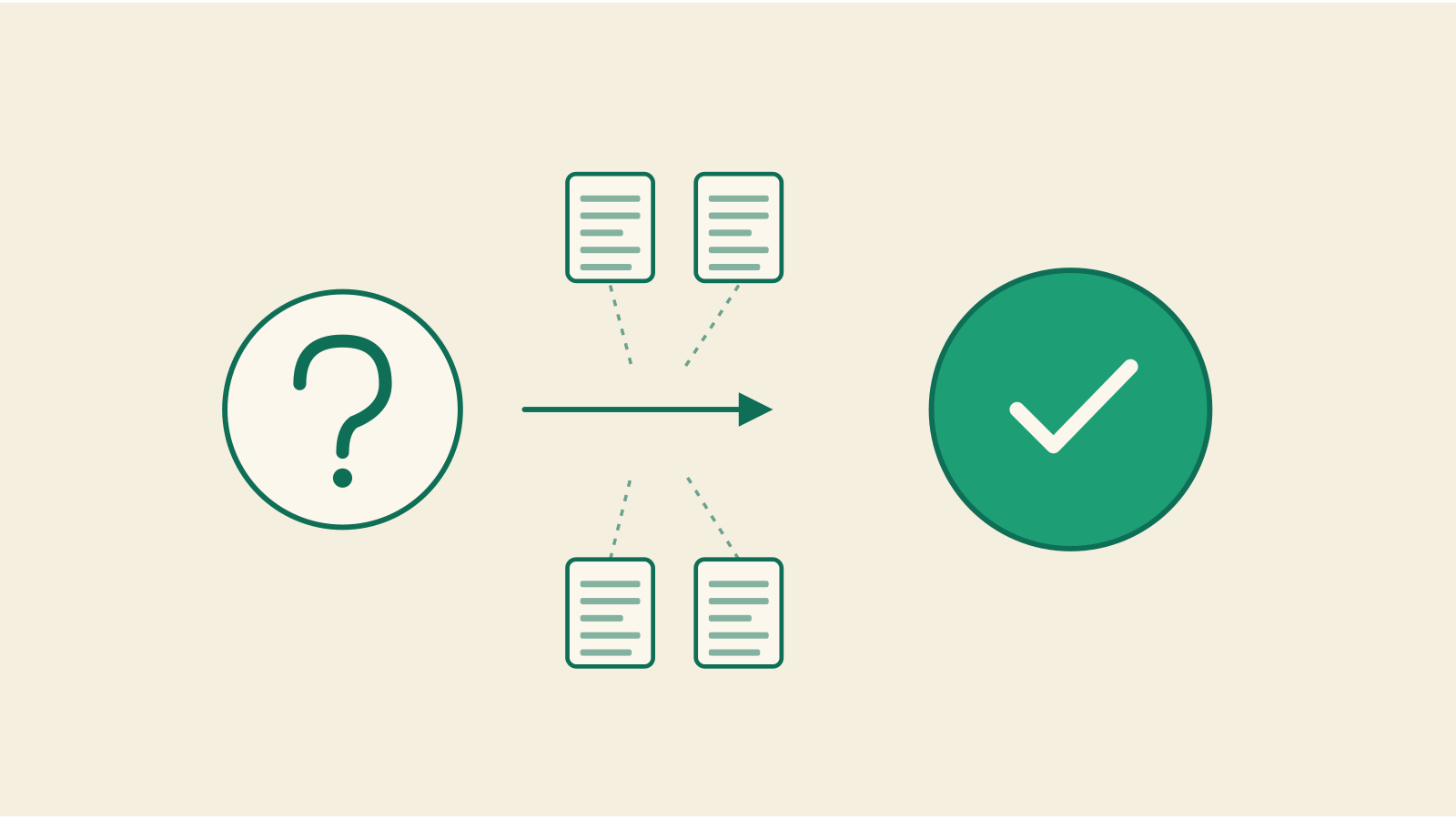
The location problem: your knowledge lives where your team doesn’t
The real issue isn’t that your company lacks documentation. You probably have plenty of it, scattered across Google Docs, Notion, Confluence, GitHub, and Linear. The problem is geographic: your knowledge lives in one place, and your team lives in Slack.
Nobody opens Confluence mid-conversation to look up a deployment process. Nobody pauses a Slack thread to search three different tools for the answer to a quick question. Instead, they do what’s fastest: they @ someone.
This creates a brutal pattern. Engineers face a ping roughly every two minutes during core work hours, which adds up to around 275 interruptions per day according to research from the University of California, Irvine. Each one pulls someone out of focused work. Each one is a symptom of the same mismatch.
Questions get asked where people are. Answers live where people aren’t.
The questions that actually kill engineer productivity in Slack aren’t simple retrieval questions like “where’s the onboarding doc?” They’re synthesis questions: why does the auth service work this way, who owns the billing service, what did we decide about the new onboarding flow. Answering those requires pulling from code, conversation history, and docs at the same time. A tool that only searches a wiki can’t answer them.
That gap between where work happens and where knowledge sits is the root of interrupt-driven culture. Bridging it manually doesn’t scale. It just burns out the people who know the most.
What happens when answers disappear into threads
Even when someone takes the time to write a thorough answer in Slack, that knowledge has a shelf life measured in hours. Slack threads aren’t documentation. They’re context that existed for 30 seconds, helped one person, then vanished into the archive. There’s no taxonomy, no version control, no way to surface that answer when someone else needs it next Tuesday.
Formal documentation doesn’t fare much better. Technical docs become materially outdated within 30 to 90 days of publication, and according to a Zoomin Software study, 68% of enterprise technical content hasn’t been updated in over six months. A full 34% sits untouched for over a year.
Now consider what that means for Slack threads, which were never meant to be documentation in the first place. If structured, intentional docs decay that fast, thread-based answers are already dead on arrival. The same question resurfaces next week, asked by someone different, answered by someone tired. Knowledge doesn’t accumulate. It evaporates, and the cycle compounds quietly until your team is spending more time re-answering than building.
The range of solutions: from basic bots to knowledge intelligence
Not every tool that answers questions from Slack using internal docs works the same way. The differences matter more than most buyers realize.
The failure mode with most tools in this category is the knowledge base being queried, not the bot itself. If the docs are stale, the Slack answers will be stale too. The only durable solution is a system where the Slack agent and the knowledge maintenance layer are the same product, not two separate things bolted together.
Static search bots
The simplest options are keyword-matching bots that scan a connected wiki or help center and return links. You ask a question, you get a list of pages that might contain the answer. It’s Google for your internal docs, which means it’s barely faster than searching yourself.
Retrieval-augmented answer engines
A step up: tools that use AI to pull relevant passages from connected sources and generate a synthesized response. These are better, but they’re only as good as the documents they index. If your docs are stale, the answers will be too.
Live knowledge intelligence
The most capable category stays grounded in sources that change: codebases, Slack conversations, task trackers, and pull requests. Instead of searching frozen snapshots, these systems understand your software as it evolves and generate answers from that living context.
| Capability | Static Bots | RAG Answer Engines | Knowledge Intelligence |
|---|---|---|---|
| Returns links | Yes | Sometimes | Rarely needed |
| Generates answers | No | Yes | Yes |
| Understands code | No | No | Yes |
| Stays current automatically | No | No | Yes |
The gap between each tier is real. A tool that searches six-month-old Confluence pages will give you a confident, well-formatted wrong answer. A system grounded in live sources gives you one you can actually trust.
What makes an answer actually useful
Getting a response in Slack is easy. Getting one you can trust is a different problem entirely.
Three qualities separate a useful answer from a liability:
- Cited: every answer links to the specific document, code file, Slack thread, or Linear task it came from. Engineers can click through to verify and dig deeper, instead of just taking the output at face value. That traceability is what makes it safe to replace the “ask a senior engineer” pattern, the answer shows its work.
- Current: it reflects what’s true right now, not what was true when someone last updated a wiki page four months ago. An answer grounded in stale docs is a well-formatted hallucination.
- Contextual: it understands what you’re actually asking. “How do we handle auth?” means something different to the backend team than it does to someone writing onboarding docs. Good answers account for that.
Most tools nail one of these. Few get all three. The dangerous ones get zero but still respond with total confidence, pulling from outdated sources and presenting the result as fact. That’s worse than no answer at all, because it looks right until it breaks something. The tools worth paying for pull from multiple live sources, show their work, and let you trace every claim back to something real.
How Falconer turns Slack into your source of truth
You can mention @Falcon in any Slack channel and get a cited answer pulled from your connected docs, GitHub, Linear, and Slack history. No tab switching, no hunting through wikis, no pinging the one engineer who remembers.
Falconer is also thread-aware. When you mention @Falconer inside an existing Slack thread, it reads the full conversation history before responding, so follow-up questions don’t lose context. This matters most in technical debugging threads, where earlier messages often carry the context that makes an answer actually correct.
Every answer ships with citations so your team can verify before they trust. Answers also respect your existing permissions — users only see results from docs and sources they already have access to.
What sets Falconer apart from the retrieval tools covered earlier is that it stays grounded in live sources. When a PR merges, Falconer identifies affected docs and proposes exact edits. Document owners get a Slack DM with the draft and can accept, review inline, or reject. The system deflects up to 75% of routine questions, and answers reflect what’s true today, not what someone documented last quarter.
The loop closes in both directions. From Slack, you can update existing docs directly from a thread, in addition to creating new ones, so good answers stop disappearing into the archive and start accumulating as permanent, searchable knowledge. For engineers working in Claude Code or other agentic tools, Falconer also connects via MCP, so the same live knowledge layer is accessible directly in coding workflows.
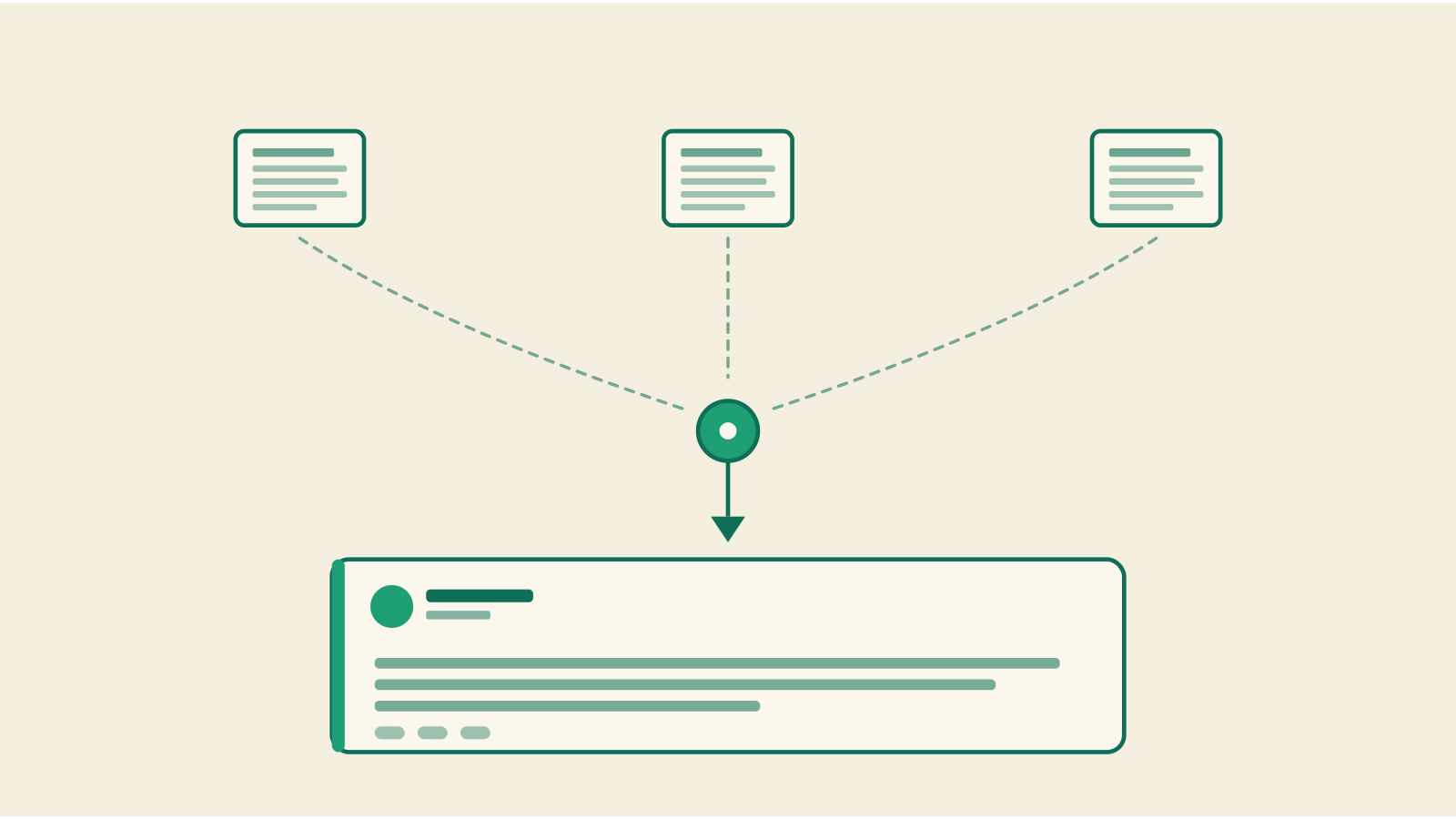
This is what it looks like in practice:
A support team member opened an engineering help ticket, then closed it minutes later after Falcon auto-responded in Slack with the correct answer. The engineer was never interrupted.
The impact on support, ops, and sales teams is often underestimated. These teams used to either go unanswered or interrupt engineers for questions grounded in code and architecture. With Falconer, anyone can ask Falcon in Slack and get a cited answer on demand without pulling an engineer out of focus work. One team running Falconer across engineering, support, and business described it this way: “It’s like if federated search actually worked.”
Falconer does not stop at simply reading your docs. It searches your codebase, decisions, tasks, and conversations. As your software evolves, the answers stay accurate instead of decaying alongside forgotten wiki pages.
Final thoughts on building knowledge that lasts
You can keep re-answering the same questions every week, or you can build a system where answers survive past the thread they were written in. With a Slack-native knowledge tool, knowledge stops being something only one person remembers and becomes something your whole team can access instantly. The interruptions drop, the answers improve, and your engineers get back to doing what you hired them for. Get started with Falconer and start deflecting questions today.
FAQ
What’s the best tool that answers questions from Slack using internal docs?
The best option depends on your sources. If you need answers grounded in live code instead of static wikis, look for knowledge intelligence tools like Falconer that connect to GitHub, Slack history, and task trackers: everything beyond document repositories. RAG-based answer engines work if your docs stay current, but they break down when documentation goes stale.
Can a Slack bot actually reduce engineering interruptions?
Yes, but only if it deflects questions without creating new work. Auto-answering bots that pull from live sources can handle 75% of routine questions, while basic search bots that return link lists just add friction. The key is whether the tool generates cited answers or forces people to keep digging.
How do you keep Slack answers from going stale like documentation?
Connect your answer tool to sources that update automatically: your codebase, pull requests, and ongoing Slack conversations. Static documentation decays within 30 to 90 days, so any tool that only searches wikis or help centers will serve outdated information within months.
What’s the difference between a retrieval bot and knowledge intelligence?
Retrieval bots search frozen documentation and return links or passages. Knowledge intelligence systems understand your codebase and connected sources as they change, generating answers that stay current as your software evolves. One gives you a search result, the other gives you grounded truth.
Should I use a search bot or build a custom Slack integration?
Use an existing tool unless you have specific compliance requirements that prevent third-party integrations. Building and maintaining a custom bot that stays accurate across code changes, docs, and Slack history takes dedicated engineering time most teams can’t spare.