Context sovereignty: why Atlassian's new data policy is a problem (April 2026)
Atlassian will begin using Confluence customer data to train its AI models effective August 17, 2026. For engineering teams, that changes the calculus: Confluence was already painful to use, but it was defensible as a place to store internal knowledge. Now the knowledge itself is at risk. This guide covers what the policy change means, why organizational context matters more than most teams realize, and how to migrate your knowledge base to Falconer, a platform that doesn’t train on your data.
TLDR
- Atlassian will train its AI models on your Confluence data starting August 17, 2026. There is no reliable way to opt out.
- Organizational context, decisions, architecture, processes, is the only asset your competitors can’t replicate with a better model.
- Scattered, outdated knowledge doesn’t just slow down your team; it degrades every AI agent that relies on it.
- Migrating from Confluence to Falconer takes less than a day. Your docs are imported automatically, then updated against your live codebase.
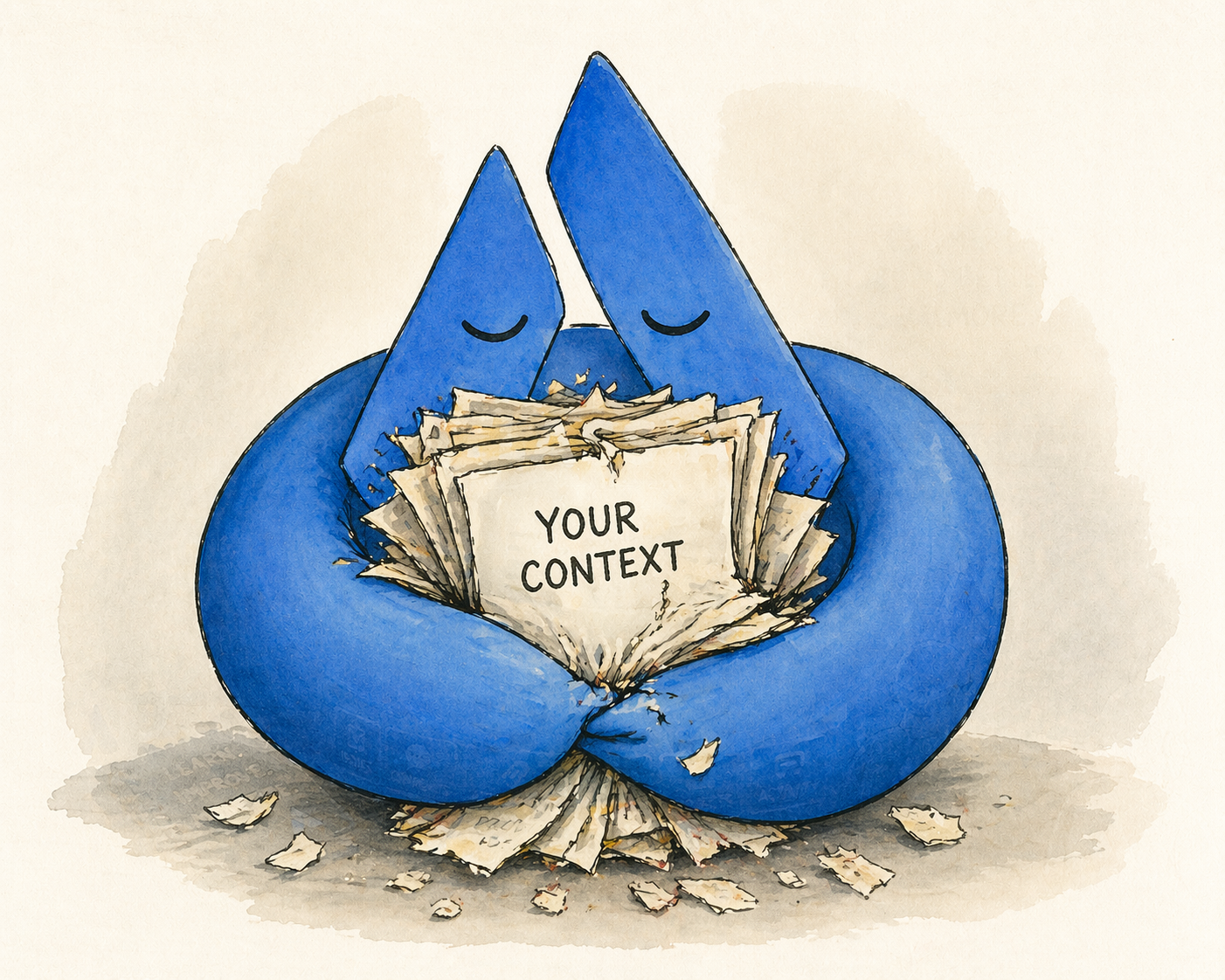
Organizational context is your only non-commoditized asset
Satya Nadella called out the importance of context sovereignty at Davos this year: “There is comparative advantage in firms. That needs to be preserved, even in the AI era. That’s what’ll give you real sovereignty.”
What context actually means
Organizational context is the accumulated record of how a company thinks: why decisions were made, what was tried before, and the tradeoffs evaluated along the way. In an agent-driven workflow, that record is the primary input. The quality of what an agent produces is bounded by the quality of what it knows about your organization.
Why it compounds over time
Teams that maintain accurate context get better results from AI, move faster, and produce higher-quality decisions, which generates more context worth keeping. The teams that invest in this now will be harder to catch. The ones that don’t are giving that advantage away.
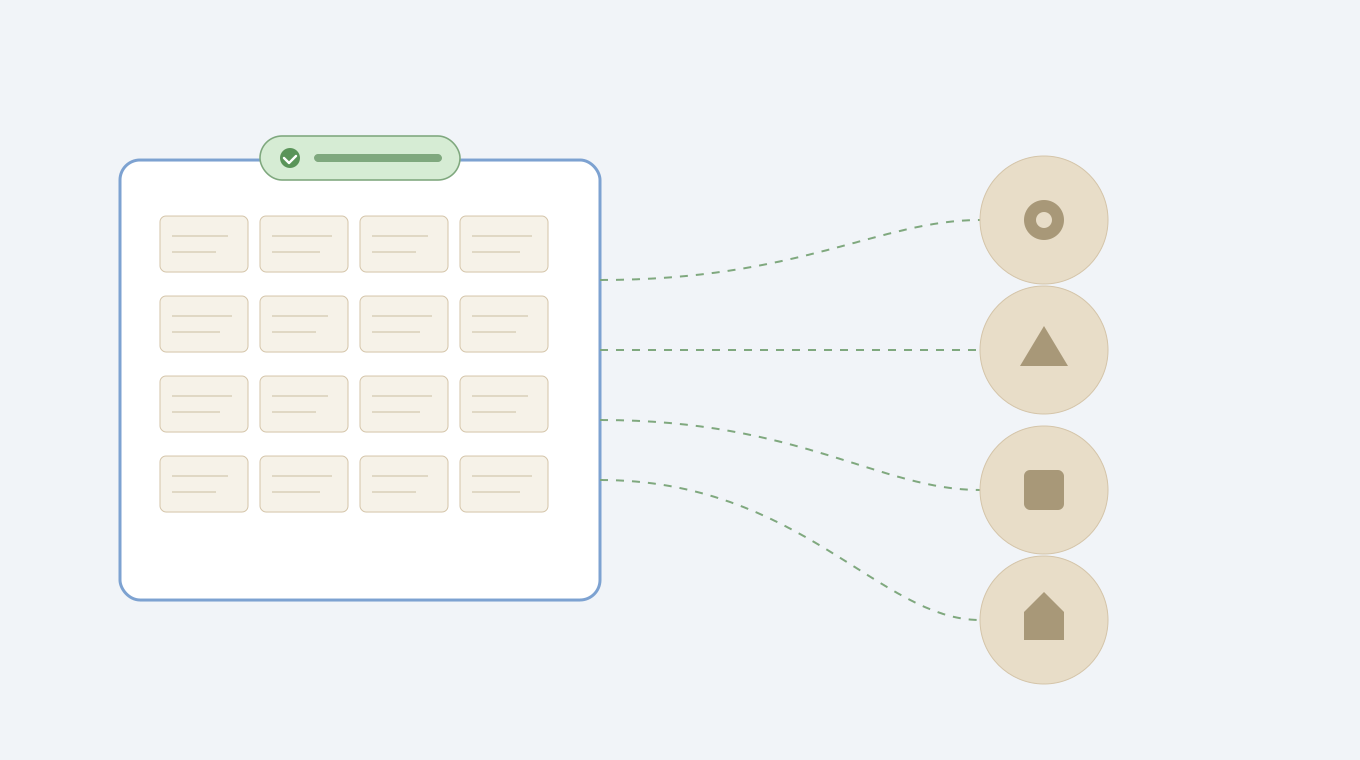
Every company has the same models. Not the same context.
From large incumbents to the latest YC batch, every company has access to the same frontier models, techniques, and agents. The differentiator is context: your business logic, architectural decisions, and hard-won lessons that exist nowhere else.
Scattered knowledge costs more than it used to
A few years ago, outdated docs meant slower search and an extra Slack message here and there. Today the cost is higher: agents operating with incomplete knowledge, tokens wasted re-ingesting context on every prompt, and real opportunity cost. AI-native competitors are starting fresh. They can move quickly, study your product, and find gaps to exploit. Companies that feed accurate institutional knowledge into their agents have an advantage that is hard to close.
Pointing an expensive frontier model at a neglected knowledge base won’t get you there. Accurate, centralized, well-maintained context is the foundation.
See how Falconer generates and maintains docs automatically.
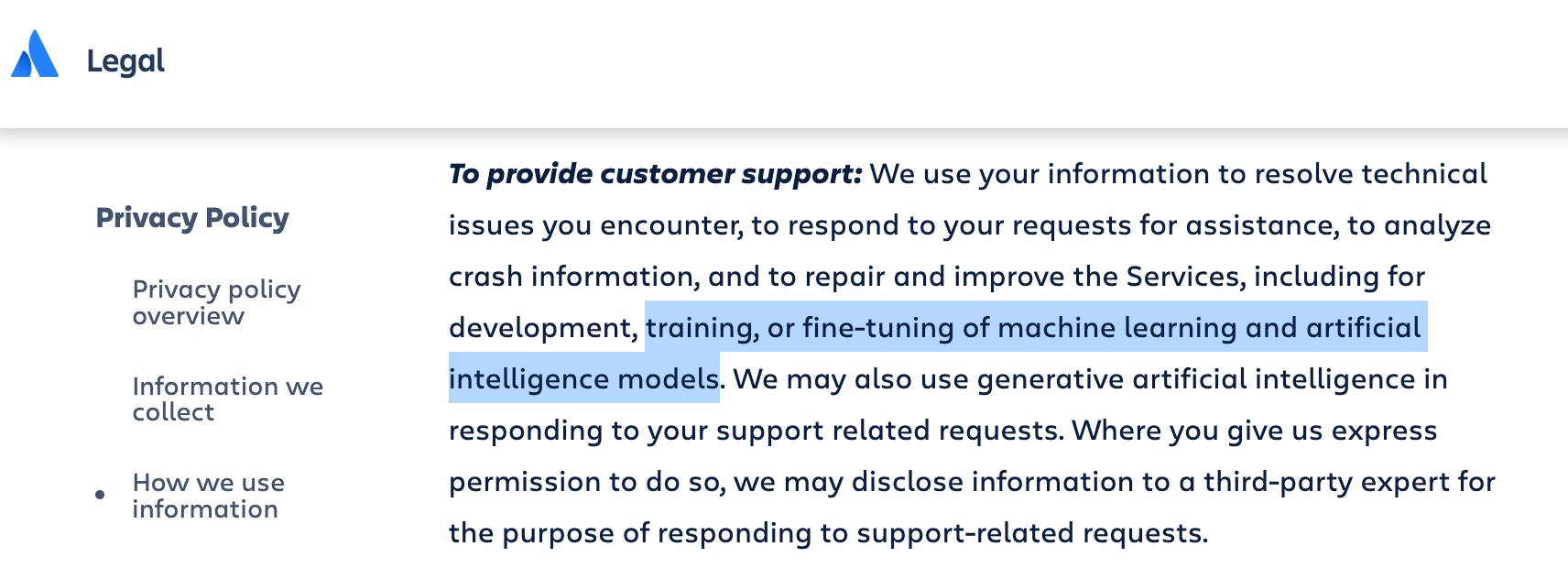
Atlassian’s new terms let them train on your internal docs
Atlassian’s updated terms, effective August 17, 2026, allow the company to use content stored in Confluence to train its AI models. That includes internal documentation: architecture decisions, product roadmaps, incident post-mortems, engineering runbooks.
The concern isn’t that Atlassian will leak specific documents. It’s that proprietary context, competitive strategy, and internal processes become part of a shared model that benefits everyone, including your competitors. Once that data is used for training, there is no practical way to remove it.
That makes the question of where your knowledge lives a security and competitive question, not a tooling preference.
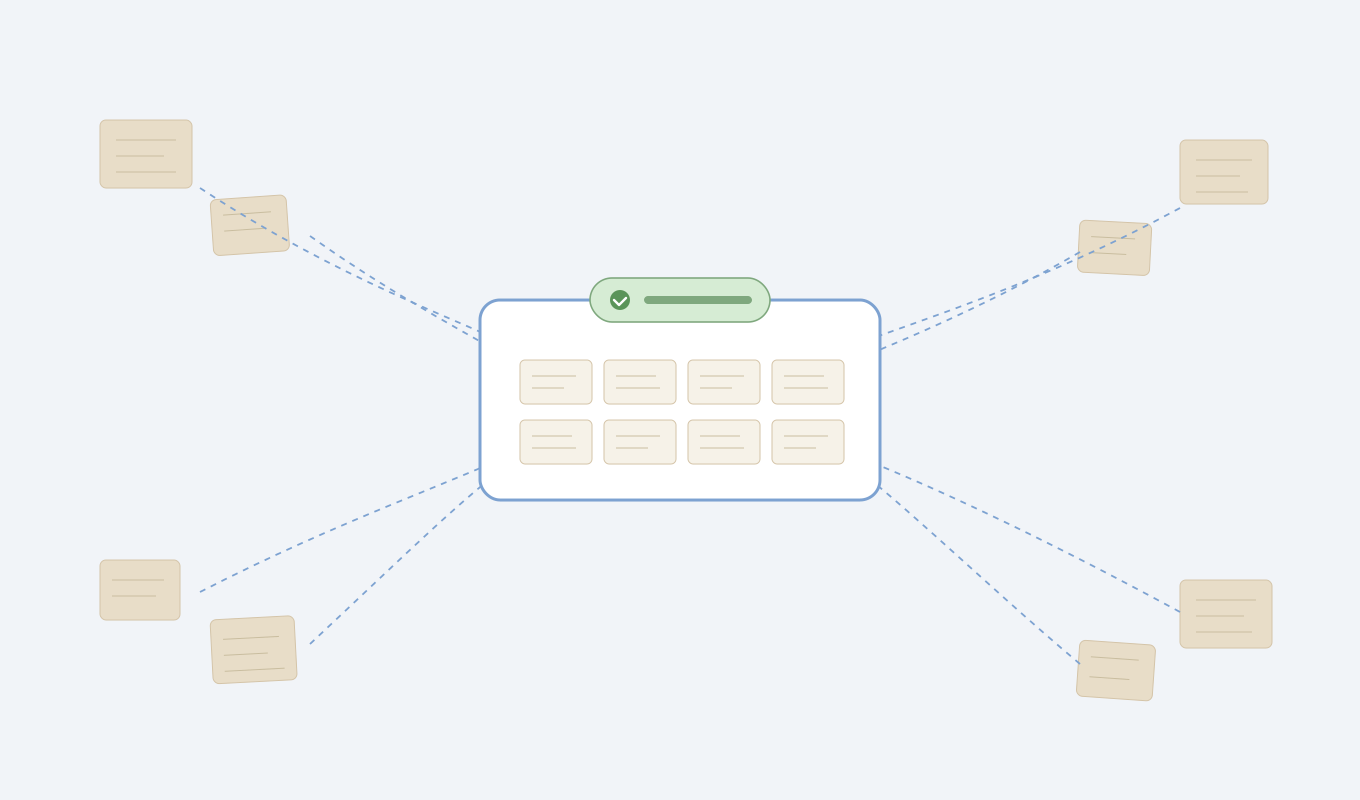
A knowledge layer is different from a wiki
Google, Amazon, and Stripe have long had internal teams acting as librarians: building knowledge tools, curating content, and keeping organizational context current. Part of what makes a company endure is that knowledge gets passed through written artifacts, not just oral history. People come and go; the organization continues because what they knew was written down.
Agents do real work now: writing code, reviewing PRs, triaging issues, building features. The gap between what an agent produces with accurate context versus without it is significant. Gaps in your knowledge base become gaps in output.
Context debt accumulates whether you track it or not
Context debt is the gap between what your organization knows and what is written down: decisions made in meetings that never made it into docs, architectural choices buried in Slack, tickets closed without descriptions. Every outdated document is a faulty instruction to an agent. Every lesson trapped in someone’s head is a gap.
A knowledge layer connects across the stack where work happens, code, conversations, tasks, meeting notes, and keeps that context current. Falconer is built around that: updating docs as your code, tasks, and decisions change, so your documentation stays accurate without anyone manually maintaining it. See how Falconer connects to your existing tools.
Your institutional knowledge is the moat, not the model
Every company has access to frontier AI. Only you have your institutional knowledge: the decisions, tradeoffs, and lessons your team has built up. Whether that knowledge is accessible and accurate, or scattered and decaying, determines how much of it actually gets used.
The Atlassian policy change is a forcing function for a conversation worth having regardless. If your knowledge infrastructure isn’t working, now is a good time to fix it.
Learn about Falconer or get started for free.
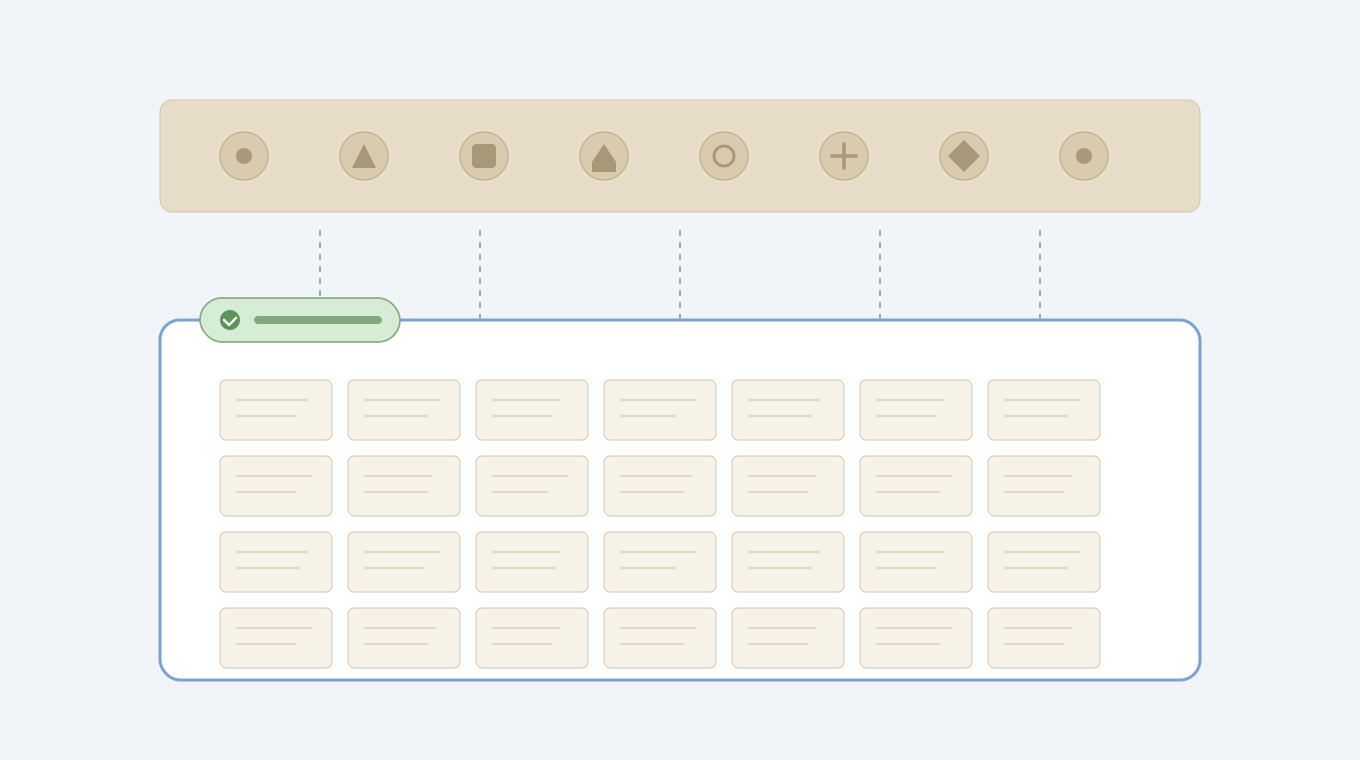
Migrating from Confluence to Falconer takes less than a day
The entire process takes less than a day. No professional services, no manual copy-pasting, no rebuilding your information architecture from scratch.
Falconer handles the import automatically.
- Connect Confluence. An admin completes the OAuth flow from Falconer’s integrations settings. Falconer gets access to all spaces by default.
- Select your spaces. A space picker lets you choose exactly which spaces to bring over. You can adjust this at any time.
- Ingest and index. Every page is immediately searchable alongside your other connected sources: GitHub, Slack, Linear, and meeting notes.
- Clean up. Ask Falcon to generate an inventory of what came over, flag stale or redundant pages, and consolidate overlapping content.
- Reorganize. Falcon restructures your content into a clean hierarchy based on how your team actually works.
- Update against your codebase. Stale Confluence docs become a starting point. Falcon refreshes them against your actual codebase from day one.
Falconer vs Confluence
| Falconer | Confluence | |
|---|---|---|
| Editor experience | Clean, fast writing canvas with AI inline | Widely reported as slow, complex, and buggy |
| Content freshness | Docs auto-update when code, tasks, or decisions change | Manual updates only; content goes stale by default |
| Codebase awareness | Connects directly to GitHub; docs grounded in your actual code | No codebase integration |
| AI integration | Falcon agent answers questions with cited, code-grounded responses | Rovo AI trained on your data as of August 2026 |
| Data privacy | Your data stays yours; not used to train external models | Atlassian will use customer data for AI training (effective August 17, 2026) |
| Search quality | Semantic search across code, Slack, Linear, meeting notes, and docs | Full-text search within Confluence only |
| Integrations | Deep integrations with Slack, GitHub, Linear, Granola, Notion, Google Drive, Zendesk | Atlassian suite (Jira, Trello); limited outside ecosystem |
| Migration | Imports Confluence docs automatically; no manual effort required | N/A |
| Setup time | Fully set up within a day; dedicated onboarding included | Complex admin setup; months-long rollout common at scale |
| Security & compliance | SOC 2 Type II certified; self-hosted deployment available for enterprise | SOC 2 certified; cloud-only for most plans |
| Pricing model | Transparent; scales with team | Per-user licensing that compounds with Atlassian suite costs |
Frequently asked questions
Can I opt out of Atlassian’s AI training policy?
Atlassian allows admins to opt out of certain AI features, but the data policy tied to Rovo and Atlassian Intelligence applies at the platform level. Opting out of specific features does not guarantee your content is excluded from training. If data sovereignty is a hard requirement, the only reliable path is moving your knowledge to a platform that does not use customer data for model training.
Falconer never trains on your data.
Do I need to delete Confluence before migrating to Falconer?
No. Falconer ingests your Confluence content without touching your existing setup. Most teams run both in parallel during the transition, with Falconer as the active source of truth while Confluence goes into read-only mode. You can deprecate Confluence on your own timeline.
What happens to my content after I migrate?
Imported docs are indexed and searchable in Falconer immediately. Falcon can identify outdated pages, consolidate duplicates, and reorganize content into a clean hierarchy. Docs are also updated against your live codebase, so content doesn’t stay stale after the import.
How long does the migration actually take?
Most teams complete the initial import and setup within a day. Falconer handles connecting to Confluence, ingesting spaces, and indexing content automatically. The work on your end is selecting which spaces to bring over and reviewing Falcon’s cleanup recommendations. See how to connect your sources.
Is Falconer secure enough for enterprise use?
Falconer is SOC 2 Type II certified and supports self-hosted deployments for teams with strict data residency or air-gap requirements. Customer content is never used to train external models. Dedicated onboarding and infrastructure support are included for enterprise teams. Startup teams can get started here.
What if our Confluence docs are a mess?
That is the common case. Falconer is built for brownfield migrations: disorganized hierarchies, redundant pages, outdated content. Falcon audits what comes over, flags what needs attention, and proposes a cleaner structure for you to review and approve. The goal is to turn a neglected knowledge base into a working one, not just move it somewhere new. Learn how Falconer works.
Ready to get started?
Create an account and start building your knowledge base — no contracts or credit card required. Or, contact us to design a custom package for your team.
Ready to get started?
Create an account and start building your knowledge base — no contracts or credit card required. Or, contact us to design a custom package for your team.